Press
An Artist of Acute Sensibility and Superb Esprit
A Writer Seeking the New Path of Korean Modern Calligraphy and Painting
After Facing Yajung' s Collection of Paintings and Calligraphic Work
An Artist of Acute Sensibility and Superb Esprit
|
| On the publication of The Works of Calligraphy and Literary Artist’s Painting by Professor Yajung Suh, Kun-sub |
| Poet;
Former Editor-in-chief of The Maeil Shinmun Lee, Tae-soo 2017.12.17 |
| I
|
|
Humans, unable to bring the beauty of nature into their space, have utilized a
method of imitation as a way of art.
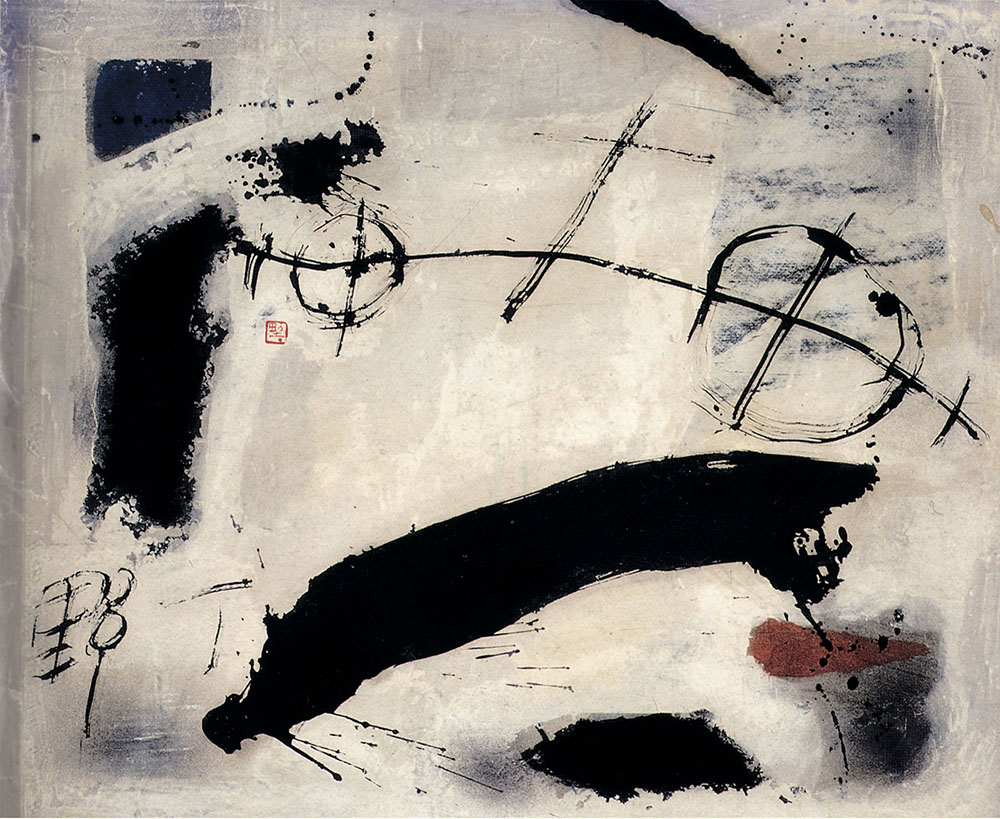
Yet, the role of art is not limited to satisfying the instinct to imitate, for art itself is endowed with the duty to deliver nature' s beauty from a higher aesthetic perspective. Superficially, the products made by the artist are not living breathing organisms. However, in reality, they are pulsating 'living organic bodies' born of the noble human spirit. In these 'organic beings,' the objects an artist intends to depict and the human spirit is integrated through lines, colors, and forms that reflect his aesthetic senses. Thus, the objects produced may emit a new aesthetic appeal, for they are reborn through the artist' s controlled senses. Both calligraphy and mun-in-hwa, or 'painting in the literary artist' s style,' are our traditional art genres. The artist writes or draws in black ink on white paper or cotton cloth. these styles command geometric and metaphorical techniques. In this humanistic approach, disciplined balance, harmony, and transparent light are regarded as the forte or the supreme virtues. A calligrapher is an artist who strives to configure and refine 'mental images' in a geometric design, and turns them into concrete forms strictly following the traditional norms. Unlike schematized conventional calligraphists, a futuristic artist dares to venture into a vast, strange and mysterious new realm. He wishes to broaden the artistic horizon in particular and help improve the quality of life in general. |
|
| II
|
|
Professor Yajung, Suh, Kun-Sub, is a future-oriented artist; unlike dogmatists, he has pursued a new trend of artistic ideals based on a frontier propelled by and equipped with superb sensibility, flair, a flashing spirit, and positive experimentalism.
He has defiantly strived to break through or cross over the obsolete and tenacious old forms and content, thereupon creating living art languages to be commanded in a new refreshed aesthetic space. He employs new techniques and materials befitting the modernistic art senses and trends; he crosses different genres to attain the effect. However, it should not be overlooked that his products invariably have their roots in the traditional norms, evidence that his real intention is to realize the quintessence of the traditional art in depth. To achieve this, he harmonizes east and west, old and new, while exploring a new reach. He boldly uses new materials from colors to fabrics. Recently, he has ventured to make 'solecism' by introducing solid figure techniques as in abstract expressionism or structural art. Thus, his 'literary artist' s painting' are also depicted in simple lines and bold touches which carry fresh and renovated inner images. In this context, he sometimes creates 'non-concrete images' to describe thee pith of objects. With simple but delicate touches, he is able to capture the quintessence of figurative forms; with bold compositions and vigorous means, he successfully produces fine abstract pieces. Based on these methods he successfully built his artistic world. 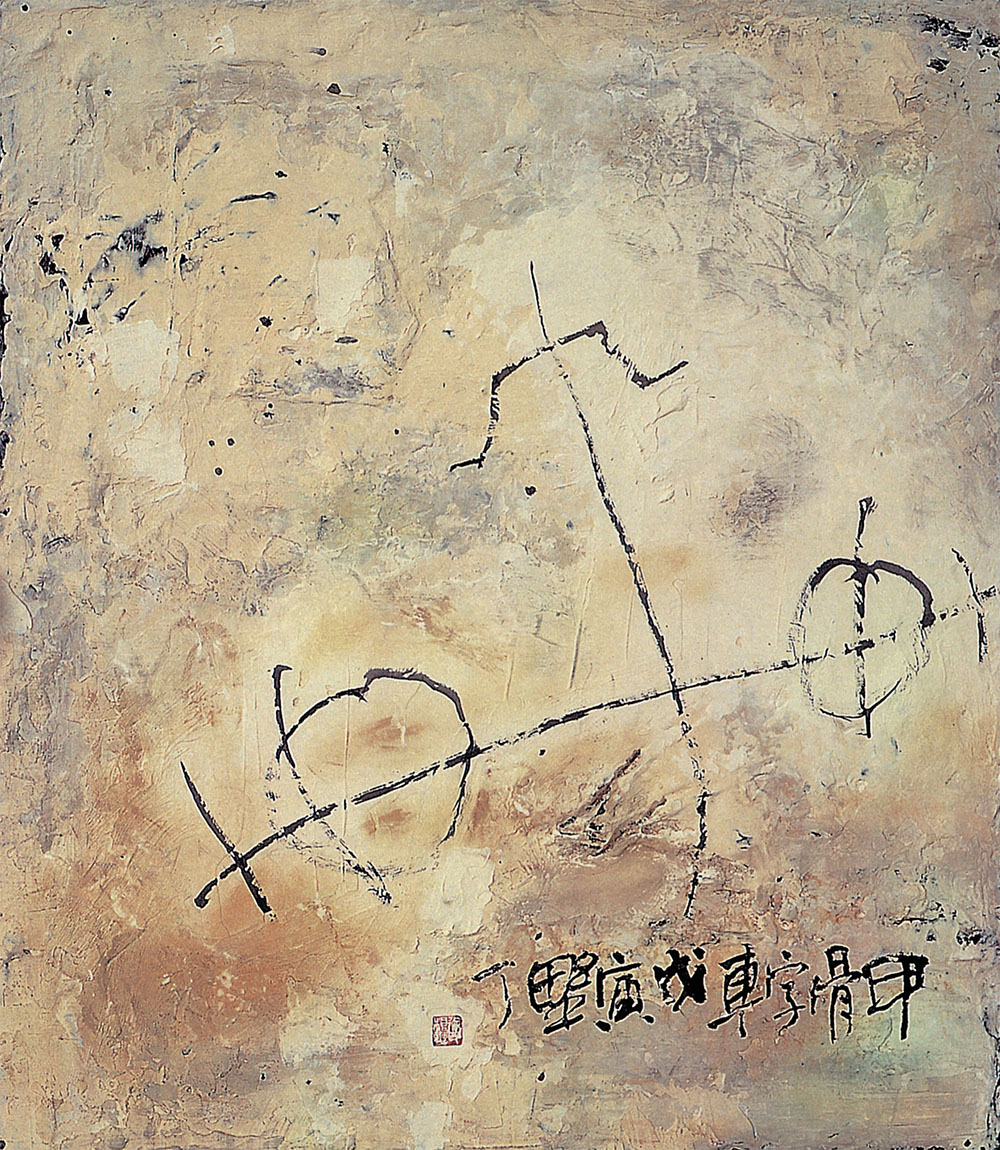
These feats are achieved in his calligraphic work via grafting writing with painting or regressing the current types to ancient hieroglyphs for maximum formative effect. In the late 1980' s, professor Suh began experimental trials to overtake the old obsolete concepts that value laconic, antique and symmetric styles above all else. He attempted to confer pictorial effects on the brush writing by both diversifying the material and introducing modern techniques such as collages. As Professor Lee, Jung-hee of Keimyong University said, "Professor Suh has been successful in establishing his own art world. In his artistic products, traditional and modem styles coexist, abstract and concrete techniques are harmonized, and calligraphy and literary drawing sheer values as a pair." |

|
| III
|
|
His present, progressive futuristic approach, it is noteworthy, has been natural, or rather inevitable for him who was already well-versed in traditional art in his younger days.
He was born with a talent for art as the son of Juknong Suh Dong-gyun, the great calligraphy virtuoso. He grew up training in brush-writing under his father. In a sense, he was destined to devote his life to the cultivation of the art of brush writing in a more opportune environment. Considering his favorable childhood environment, it is all the more natural that he earned his fame at an early aga that he presently enjoys more. The proverb, Like father, like son' rings true in this case. By the time he began to gain fame in the 1970' s, he had honed the skills with his father. His studies ranged widely covering historic masters' classics; the square styles of Ann Jin Gyong, Gu Yang Soon, Jeo Su Ryang, and Yukjo' s as well as the cursive style of Wang Hee Ji. Soon after, he focused on Jeonseo (the seal characters) in the books of Seoji-mun, and on Yeseo (simplified square style) preserved in the materials of Jangcheon-bi, Sasin-bi, and Jojeon-bi. Throughout the 70' s, he delved into two writing styles of Yeaseo and Jeonseo. Achieving great progress in his calligraphic capability, he established himself as a highly famed calligraphist in the country. By then the art circle appraised his art as comparable to that of his father. Soon after his father passed away in 1978, the tireless ingenious artist resumed his study in the classics with the intent of opening a new road forward. He surveyed the most outstanding works in five styles; the antique cursive style, gift letters, simplified characters, inscriptions on the tortoise carapaces, and the running hand of the Qing period. 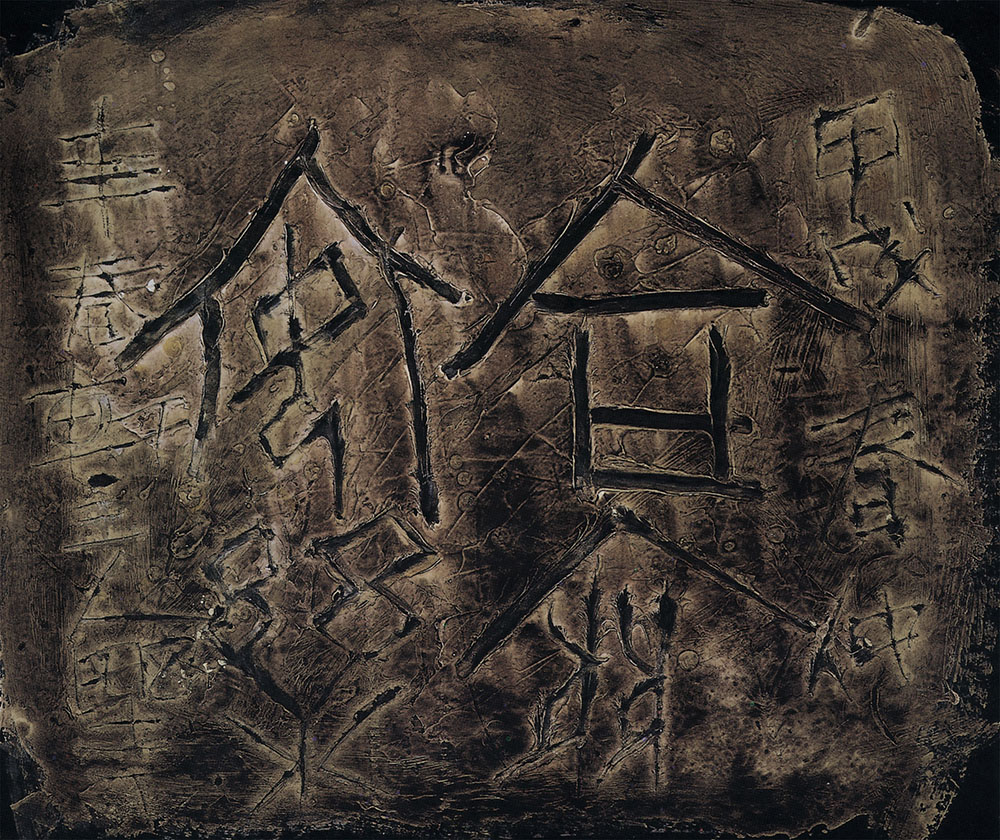
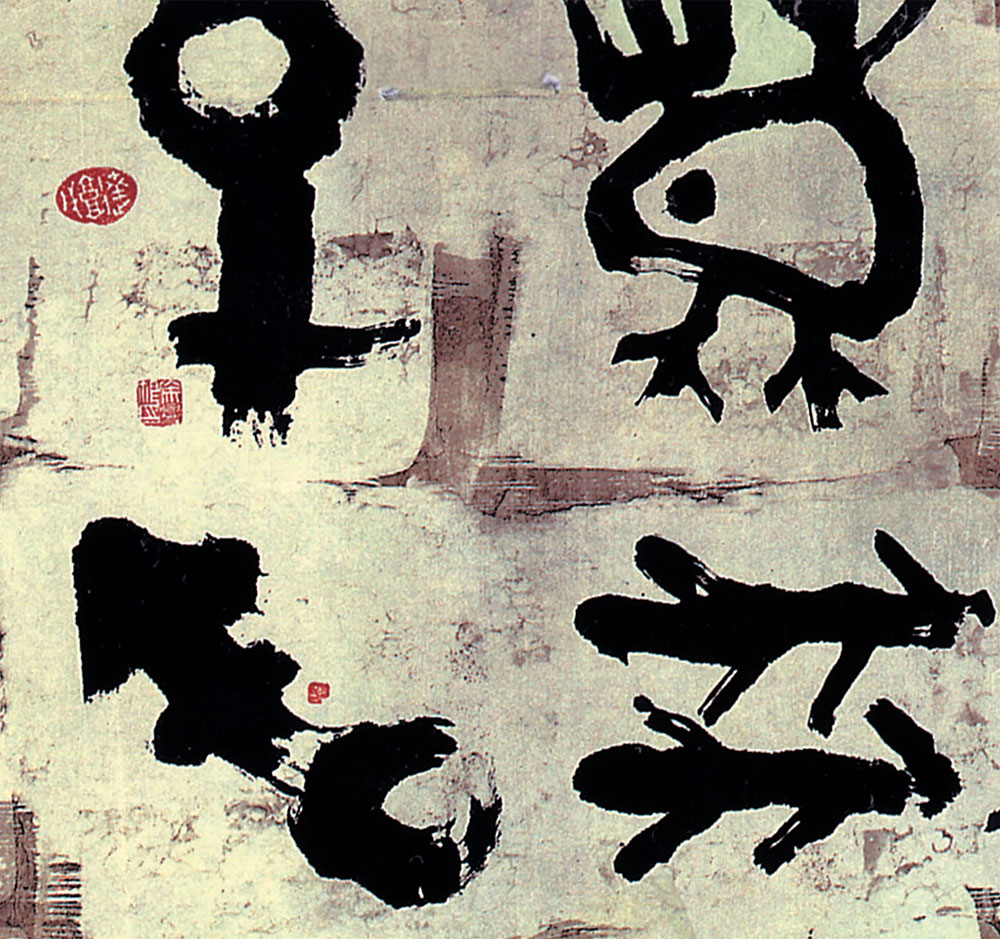
Meanwhile, he was never remiss in pursuing the aesthetic values of literary artists' s drawings which cover the Four Gracious Plants (plum, orchid, bamboo, and chrysanthemum), as well as figures, landscapes and still life. When his artwork was selected for the National Fine Arts Exhibition, his fame elevated even more. In the early 1980' s, he began to display his multifarious art products reflecting his modernistic flair and ideas in a noble design. Since then Professor Yajung Suh0, Kun-Sub has spearheaded the timely art movement. Equipped with acute sensibility, superb esprit, and brush strokes bolder than his father' s, he is duly qualified to be praised as a representative Korean calligrapher and literally-style painter both at home and abroad. |
|
| IV
|
|
Professor Suh has long been active in art education and social art activities.
He taught art students at Keimyong University which opened its Department of Calligraphy in 1992. He led the opening of a graduate-level program for the art of calligraphy at the university, which has since produced over a hundred MA' s and Ph.D.' s. He has also been deeply involved in social art activities. for more than 40 years he has led Juknong Seodarn following his father. the private art society originated from Seo-hwa-hwoe (calligraphy and painting society) founded by Seokjae Seo, Byong-O in 1923. Then, Juknong, Prof. Suh' s father, ran it until he transferred it to his son in 1973. The current name, Juknong, is the pen name of the late virtuoso. In view of regional calligraphy history, it' s suggestive that a family has kept an art society for almost one century through three generations. 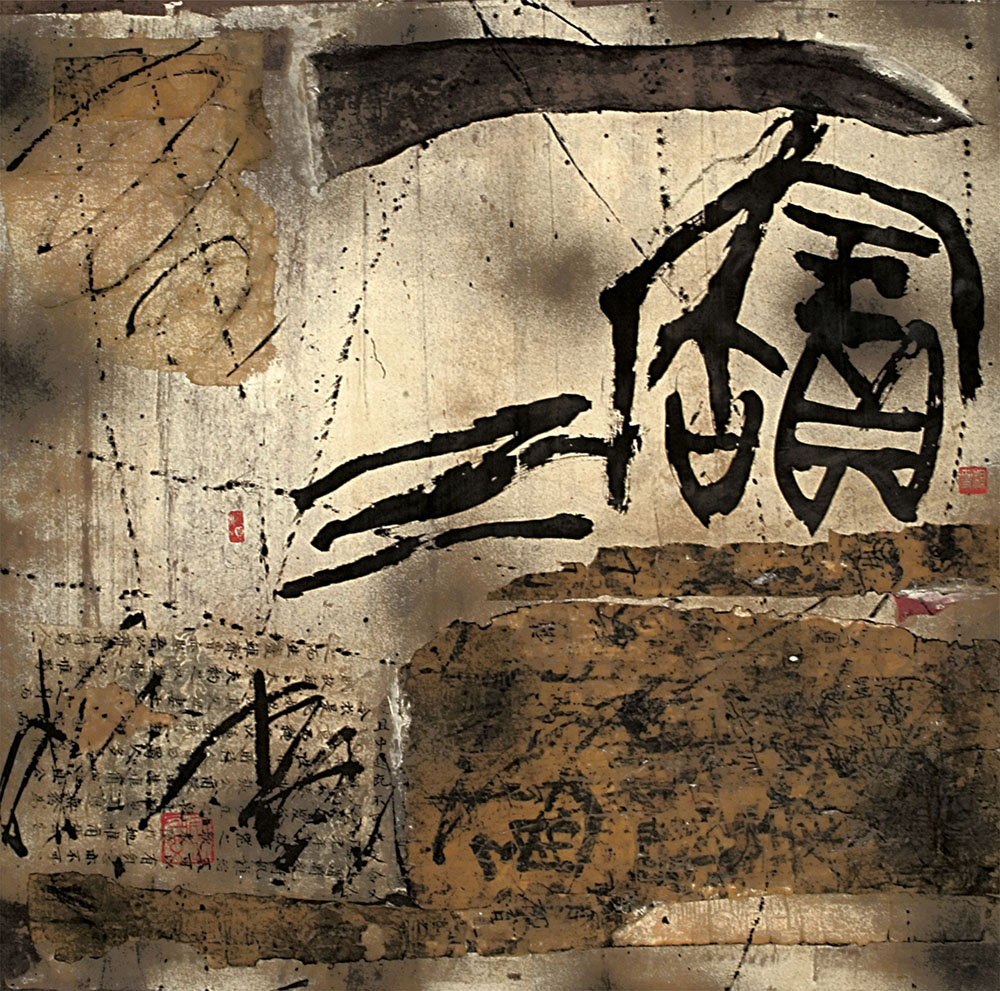
Prof. Suh healthy and energetic is ever active on the board of several organizations; Chairman of both Yeongnam Calligraphy Association and Daegu Calligraphy Society, and Vice Chairman of the Korea Fine Arts Association. His activities extend to other honorable duties and positions. He is both a member of the steering committee and a judge for the Korea National Fine Arts Exhibition. In addition, He is much sought-after at various domestic and international art events as an invited artist, a judge or a consultant. For his outstanding artistic achievement and meritorious dedication to the development of the country' s calligraphic art, he was conferred an honorary doctoral degree in aesthetics, pictorial art, and calligraphy from Dongbang Graduate School University. 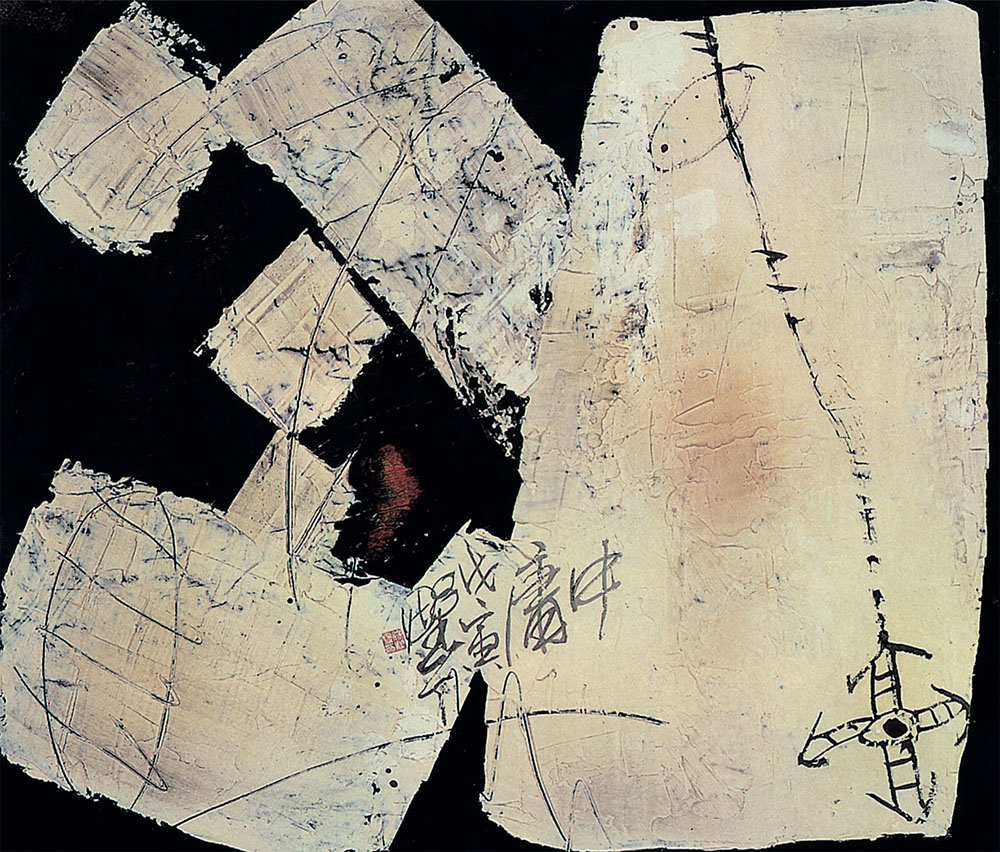
Dr. Yajung Suh, Kun-Sub has won respect and reputation for being one of the few leading artists in the country. He is now advanced in age, but he never knows the years. The erudite calligrapher and literary art painter are still busy exploring the essence of the art and better tools and devices to express it. So far, his years of social and professional art activities have yielded astonishing results that are praised not only at home but also on the international front. Here again, on behalf of all his dilettantes and admirers. I'd like to extend my heartfelt congratulations to Dr. Yajung Suh, Kun-Sub on the publication of the collection of his invaluable artworks. |