Press
An Artist of Acute Sensibility and Superb Esprit
A Writer Seeking the New Path of Korean Modern Calligraphy and Painting
After Facing Yajung' s Collection of Paintings and Calligraphic Work
A Writer Seeking the New Path of Korean Modern Calligraphy and Painting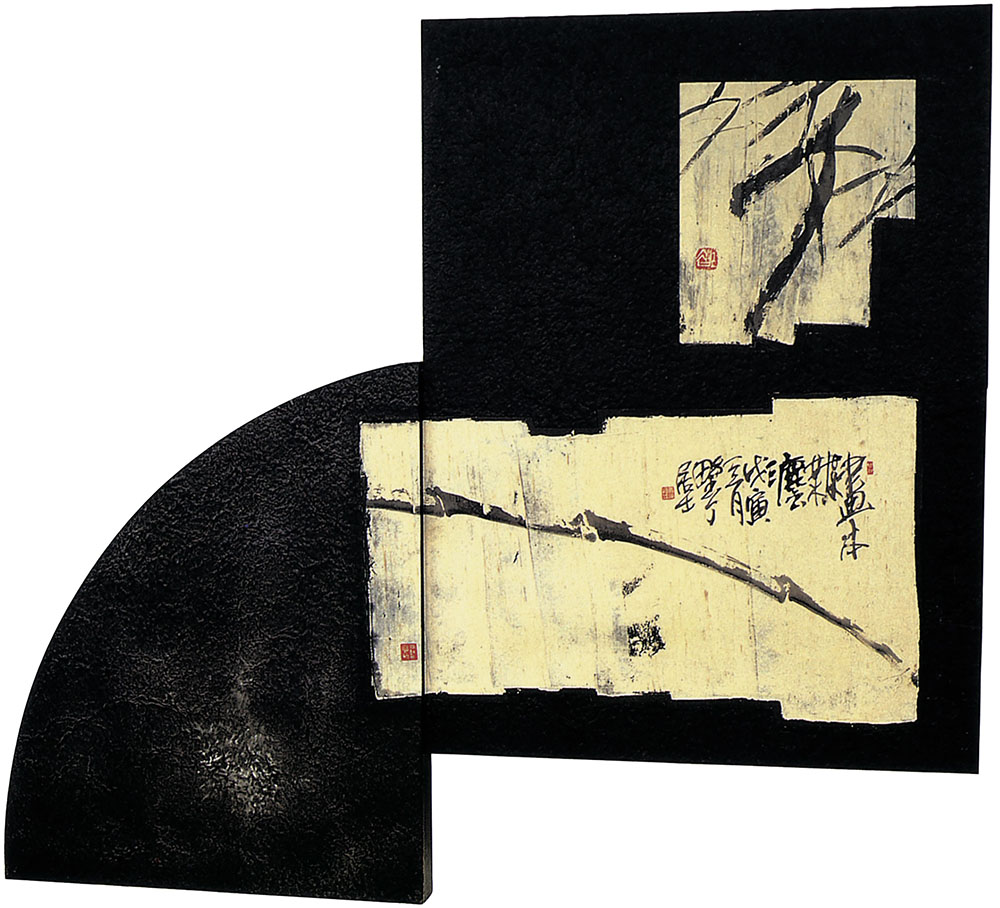
|
| Oeuvres of Yajung, Suh Kun-sub
|
| College of Fine Arts in Keimyung University Department of Arts Ph.D. Dr. Joong Hee Lee 2007.11.3 |
| I. Prologue
|
|
One of the well-known representatives of writer Yajung Suh, Kun-sub was
born in 1946, as a son of JukNong Donggyun Suh(1970-1978), a great
calligraphic artist.
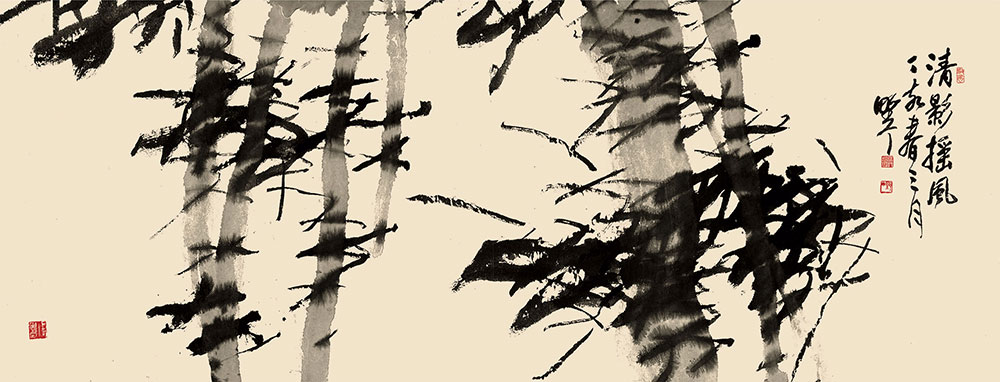
In the time of Korean Modern History, Donggyun was a prized calligraphy artist and also a National Art Contest examiner who received an Order of Cultural Merits - the first Cultural Medal for a calligraphy artist. YaJung learned how to draw calligraphic works and literary paintings from his father since he was young. Being educated by his father, ink stones and ink sticks were always in his hands and drawing was part of his childhood. In the 1970's, he copied numerous paintings drawn by his father as well as famous Chinese painters. At the beginning of the 1990's, he showed his own style of drawing in both literary paintings and calligraphy. In the 2000' s, his work showed his independent interpretation and his own world of calligraphy. In his current literary paintings, YaJung showed characteristics of both calligraphy and Indian ink: energetic lines, bold usage of spaces and expression of Indian ink. His modernistic works are drawing interests of not only writers but painters. Since literary paintings and calligraphies originate from a long history, they naturally, incline toward conservatism; therefore, materials and styles maybe new yet it is usual to show traditional expressions in calligraphic work. However, recently in YaJung' s work, YaJung showed abstract expressions similar to western modern arts in literary paintings and calligraphies: by interpreting characters in different ways, changing positions of titles and using materials other than rice paper, YaJung produced modern calligraphic arts continuously after the 1970' s. Referring to his changing style, I divided his painting life into three parts by time: learning how to draw in the 1970' s, imitating and maturing his style in the 1980' s, and creating after the 1990's. In this paper, I am going to add my opinions about his forms of work separately in those times. |
|
| II. 1970s: Learning
|
|
Many calligraphic artists developed by learning Young Mr. Kim's, Chiwon
Choe's, Wang Xizhi's and Ouyang Xun's calligraphy style of unified Silla.
Zhao Mengfu's Songseol handwriting style dominated from the time of the Korean Dynasty until the beginning of the Joseon Dynasty. Seokppong Han reinterpreted Wang handwriting style and finished forming his own style of handwriting. After the middle age of the Joseon Dynasty, his own handwriting style was used by Okdong Iseo, Baekha Yoonsun, Wungyo Lee Gwangsa and finally developed into the Original East Nation style of handwriting. In the 1800's, at the end of the Joseon Dynasty, Kim Jeong-hui, a legendary calligrapher, developed the original style of the Joseon Dynasty. Kim Jeong-hui reinterpreted clerical script with an epigraphic background and formative sense; therefore, he created the historical Chusa style. The modern calligraphic writing style continued in Chusa's School, yet, the original handwriting style was lost during the period of Japanese Occupation. Modern Art Union was formed with a contest exhibition system such as the National Art Contest, Art Contest and Calligraphy Contest. After the 1980' s, numerical growth of calligraphers along with the creation of colleges of calligraphy showed that the interest in calligraphy was, fortunately, amplifying. When the Modern Art Union started, YaJung's youth began as well. At that time, it wasn't easy to obtain rice paper, brushes, ink sticks or calligraphic information; yet, YaJung was an exception due to his father who was a great calligrapher. But although it was easy for YaJung to get materials to draw, it wasn't easy to learn how to draw from a strict father. In general, a person who learned how to draw easily cannot utilize the technology to make it their own. He had to write down a certain amount of characters that were checked every day. 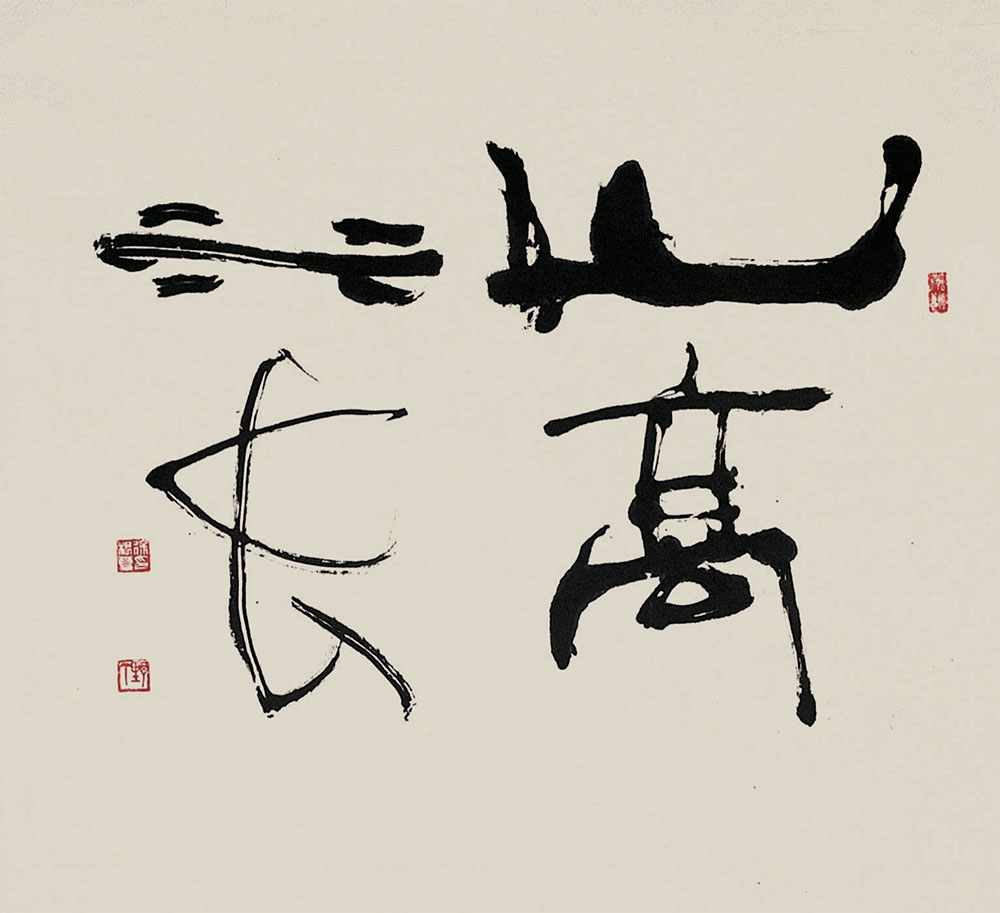
His father's way of teaching literary paintings was detailed and exhausted a lot of time. He had to study pieces for a long time and wait until he understood the pieces enough. Then he was taught how to write and draw step by step. Despite JukNong's fame as a great calligrapher, YaJung was only able to inherit a few of his father's work because JukNong burned all of his life work before his death. Burning all the works by his hand was the last expression of JukNong's intense life as an artist. By handing down his way of art to YaJung, JukNong taught him how to treat his own works with responsibility. The long period of YaJung's education in art is still the great foundation for his strong strokes and various expression of Indian ink. Many know YaJung as purely a talented literary painter, but this is not true. YaJung spared his time to perfect his calligraphic skills as well. When he began to learn how to calligraph, he learned through Ahn JinKyeong's works such as 'Ssang HakMeong', 'Gamyobee', 'GoSinCheop', and by time, he read various works like Ouyang Xun's 'JeoSuRyang' and YukJo's 'HaeSeo'. YaJung concentrated on Wang Xizhi's 'JipJaSungGyoSeo' and Ahn JinKeong's 'SamGo' for practicing a semi-cursive style of writing. In the 1970' s, YaJung was interested in the compendium and clerical script; he deeply studied Jin and HanBi with 'SeokGoMun', 'JangCheonBi', 'SaSinBi', 'JoJeonBi' and other works. Thanks to his father, YaJung was able to have them in his hands. By working hard on his basic training, YaJung was able to become a great literary artist as well as a calligrapher. During the time he studied art, he spent 80% of his effort on calligraphy and 20% of it on literary painting. Certainly, YaJung was able to know that drawing is based on a high level of calligraphic skills while the basis of writing and drawing are the same. YaJung studied hard about classic arts, and the result of his development can be seen in his works such as 'JangCheonBl' and 'JeonSeoDaeRyun' which were revealed in 1977. He spent much more time to learn handwriting, forming titles and analyzing structure; and in his traditional work of the Four Gracious Plants, he shows how hard he trained. YaJung's 'MaeWuJukSeok' which was painted in 1979 and 'PungJuk' in 1974 are comparable works to his father's. His first goal was to accept JukNong' s works as they are; and thanks to his long training, he was able to open a new world of modem calligraphy and literary painting. |
|
| III. 1980s: Groping and Maturing
|
|
JukNong passed away in 1978 when he was 76 years old.
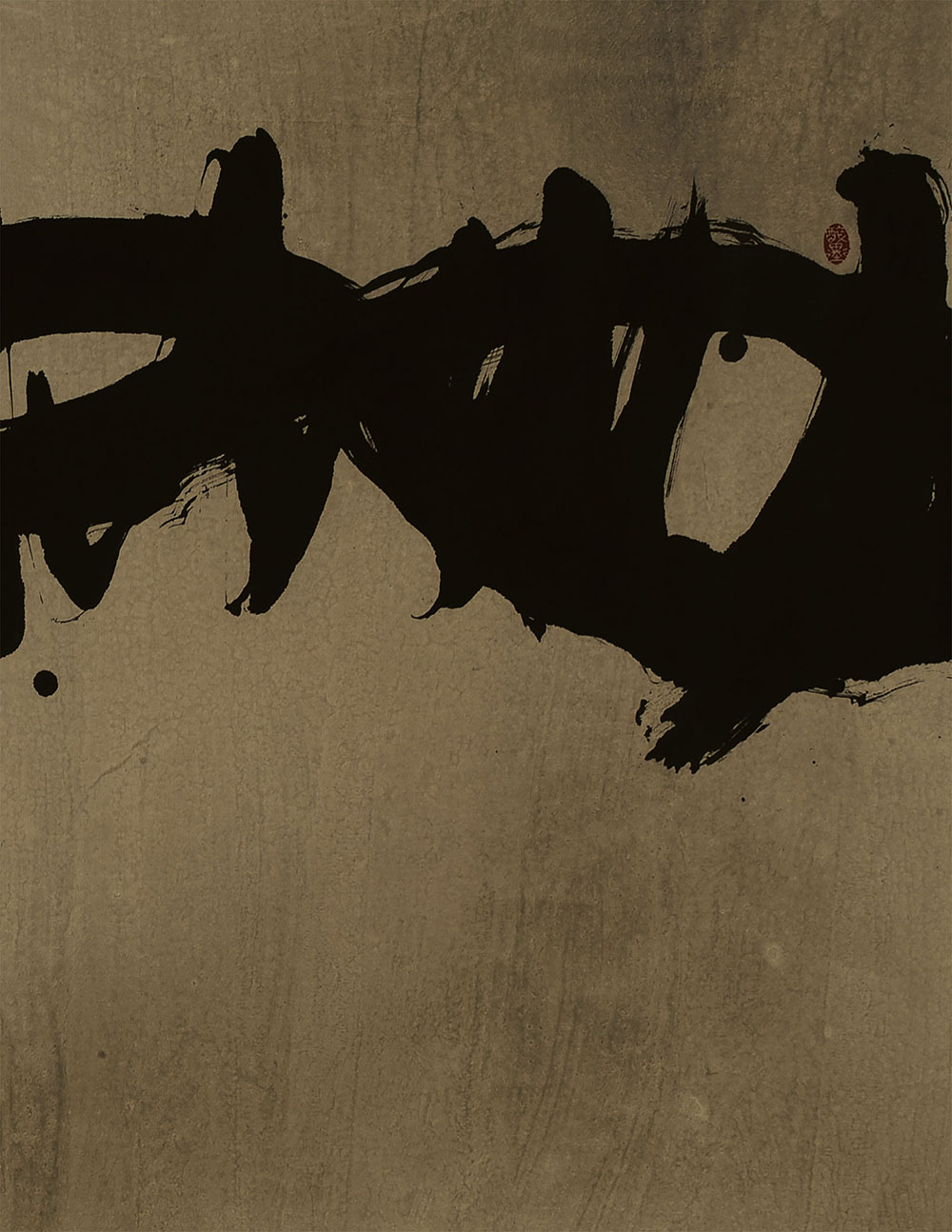
After his father' s death, Yajung stepped forward from classics to find his own world of art. I classify the time before the 1990s, after Yajung trained himself enough and started to grope for his own way of art, as a groping time of Yajung' s artist life. By then, he was interested in cursive characters, and also trained himself with oracle bone scripts, metal epigraph, ChungDae Hasogi's individual writing style as well as the semi-cursive style of writing in mid-1980. He also widened his literary painting technique by going through traditional Four Gracious Plants, landscapes, person, flowers, birds, etc. Therefore, he finally started to show his own style of painting by crossing over genres. Since the 1970's, participation in the National Art Exhibition made him a representative calligraphic artist in YoungNam. The square style of writing in the northern era was getting popular nationally, and learning classics was said to be necessary for calligraphic works by artists. The popularity of studying calligraphy went higher by importing copy books printed from the works of Chinese masters of calligraphy from Japan. Also, though it was a very small group, a few people were attracted to modern calligraphy and more people would gain interest later. Before the modem convention of calligraphy became popular, YaJung seldom presented his modem calligraphy work; yet after the 1980's, he exhibited the same amount of modem calligraphy work as literary paintings. YaJung was a frontier of modern calligraphy. YaJung presented his own style of modern calligraphy: his works, 'BanYaSimiCeong' in 1988 and 'HeeMulc' in 1987, showed a distinctive style which didn't exist before. In one of his literary paintings, the bamboo pole and leaves were depicted separately in YaJung's 'Juk'; its creative composition was never seen in bamboo drawings before. In 1989, he also presented 'HuhSimJikJeol' showing how different his strokes were compared to his father's. During the time of groping and maturing, we are able to see how hard YaJung worked to get outgrow JukNang's original style and frame of art; he conducted and perfected his own style of work from the 1970's. |
|
| IV. The 1990s: Creating
|
|
In the 1990's, the number of calligraphers increased greatly: the college of
calligraphy had expanded from one to six schools with professional painters
and researchers. The general public's perception of calligraphy changed from simple refinement and leisure to professional art. Calligraphers who settled in Korea sensed the changing flow of modern art, and some of the artists had incorporated the changing trend into their works. Being one of them, YaJung also presented his literary paintings with simplified lines and brush strokes. His works showed characteristics of western modem abstract art: shaping the inner side of subjects with bold structures and simplified expression. At this time, he became an examiner of the Korean Calligraphy Contest as well as an operating committee member. Also, he started to teach younger generations as a calligraphy professor at Keimyung University. According to Dr. JaeWan Sim who wrote evaluation papers of five private exhibitions said "YaJung mixed an existing frame with a new technique, characters, and painting; therefore, he created a new art of drawing." His works tend to go beyond the classic concept and character such as sparseness, symmetry and so on. So, the shift of modem calligraphy opened up the opportunity of globalized calligraphy. 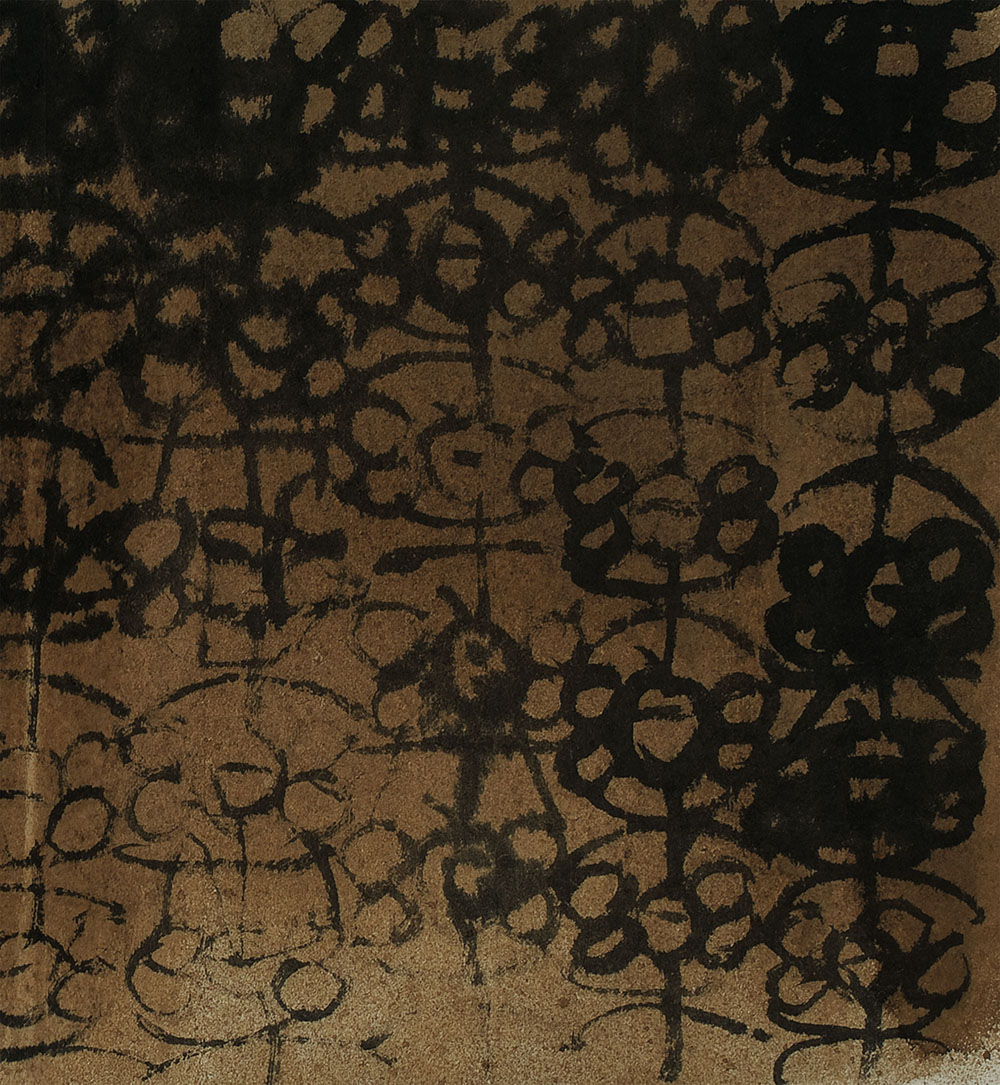
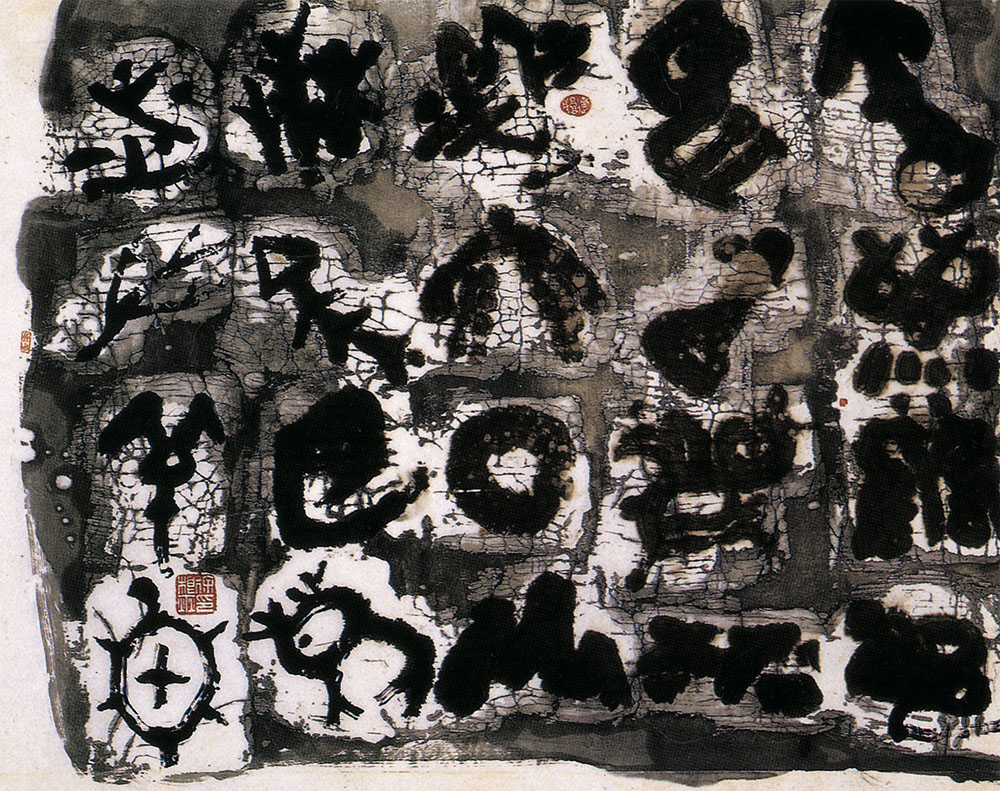
He performed calligraphy on various materials; for instance, he used linseed oil to make cracks on Chinese drawing paper as seen in his work, 'MunJaYullee(Character Play) in 1993'. Many young artists and established painters are still using the technique today. YaJung' s art wasn' t only presented on plain papers but also in three- dimensional structures. The rising sun above mountains was depicted in YaJung' s work, '11Chul(Sun Rise)', in 1988. What' s special about this painting was that viewers can observe the drawing on every side since it was drawn on a square pillar. After the 1990's, his works matured: consummate writing skills, splashed ink effect, bold structure and in many ways has shown a shocking stage of art. After the 2000's, YaJung successively filled the position of vice-president of the Korean Art Association, and he also became the chairman of the JukNong Art Union which is the oldest existing calligraphic art union in Korea. YaJung is working for the development of Korean calligraphy as well as the Daegu Art Union. In 2009, YaJung achieved the first Honorable Painting and Calligraphy Appreciation Doctor's Degree in calligraphy field from DongBang graduate school; it was meant to appreciate YaJung's 50 years of effort and study in literary paintings and calligraphic works. 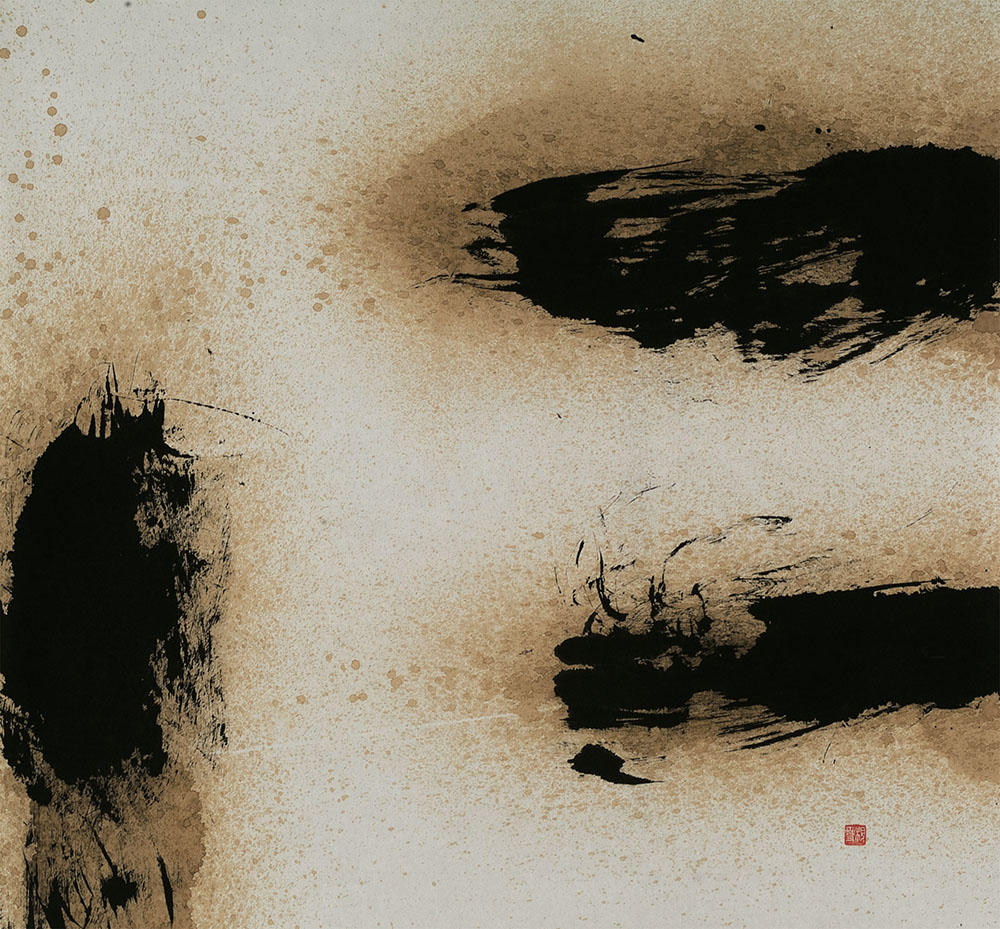
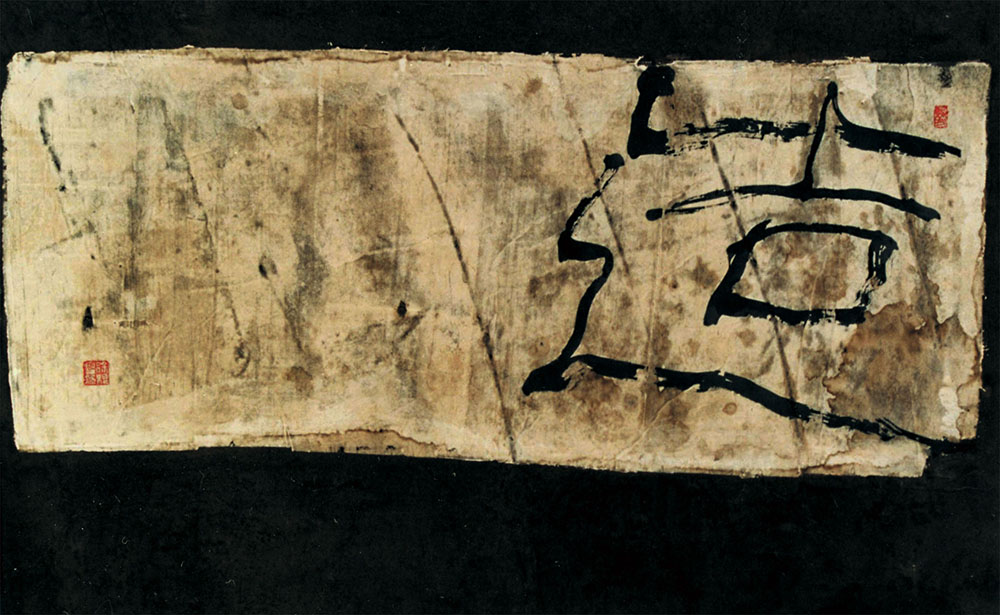
In 2001, YaJung presented 'MunJaYuHee2(Character Play II)' which was utilized various techniques such as collage, mature strokes and drooling; YaJung has been using western art techniques in his calligraphic works. Also in his literary paintings, he expanded and used bold strokes to transcend traditional painting form and to develop his own form of literary paintings as well. His literary painting 'ChuSil', presented in 2001, could have been called the new literary art since it was too creative. But now he is focusing on expressing an object' s essence with extremely abstained brush strokes; he is working on developing new literary paintings. YaJung' s work in 2010 showed profound usage of an ink stick on cotton to express an object' s essence; also, he put lamps in his works to change plain paper arts into three-dimensional paintings to bring out an unconventionalmood. YaJung said that craftsmanship does not create a tableau, but the unique concept does. Tableau is being separated from goods because it contains the artist' s will. YaJung is an experimental challenger; he used many new concepts in his work. In his late work, YaJung changed the whole paradigm of classics: traditional and new, representational and abstract, calligraphy and painting coexisting in one work of art. There are no boundaries in YaJung' s work: neither western art, eastern art, old nor new. YaJung is sending a creative new message of art to Korean painters. |
|
| V. Epilogue
|
|
YaJung is a committed traditional artist who puts in the effort to form
independent oeuvres.
Since he was six years old, he learned calligraphy and literary paintings from his father, and became an artist who spent 40 years on his career of educating young artists as well as 50 years of work activity; therefore, he influenced not only YoungNam but also the entire Korean nation by the qualitative improvement of calligraphy and literary paintings. Since 1992, YaJung produced millions of calligraphers and more than ninety master doctorates as a first calligraphy professor, and also as an Art School section chief in Keimyoung University. He and his students are working hard to develop the Korean Art Union with their artworks. YaJung also is a vigorous artist with numerous artworks. Starting from his first private exhibition in 1976, he has opened 19 private exhibitions, participated in international exhibitions, invitation exhibitions, and team exhibitions 500 times; so now he is a well-known artist internally and externally. With his fifty years of experience, YaJung is at the frontier of developing Korean modem paintings and calligraphic works. He put a modem art sense into classic calligraphic works. In other words, YaJung' s works are based on classic literary paintings and calligraphy, but interpreted with an influence of modern sculpture. As mentioned before, in his works, expression of abstraction of calligraphy is amplified, materials are varied to go beyond the limits of the four treasures of the scholar, but still maintain the expression of eastern molding principles. 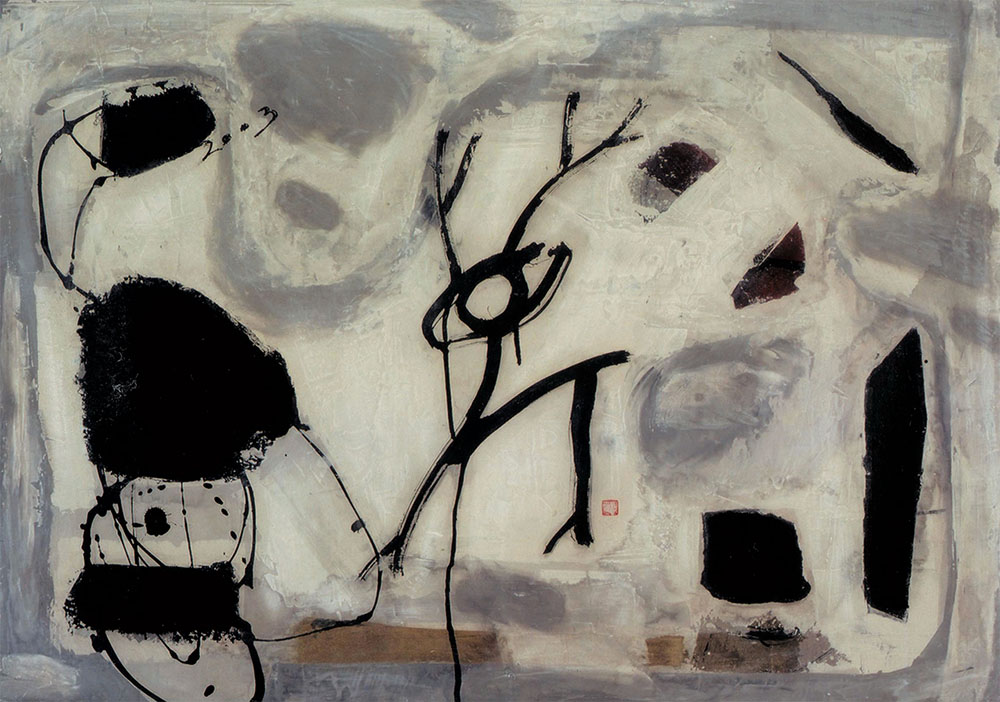
Furthermore, the connection between characters and modern paintings is the fundamentals of his original art sense. Moreover, his effort to show new works in every exhibition of his is very touching. In general, famous artists who settled down with their works don't try to be creative anymore and follow the patterns they are comfortable with. Yet, YaJung has never been satisfied with his own work despite the great outcome. His passion to create a new level of Korean modern art is not less than any other young artist. He still is painting today. YaJung' s charm as an artist is that he doesn't stop, and that's why we cannot stop waiting for his new work. |